
-
Communications
- Earned Media
- Advocacy & Issues Management
- Thought Leadership
- Change Management & Employee Engagement
- Training
- Interim Communications & Marketing Support
-
Creative Services
- Graphic Design
- Brand Identity
- Data Visualization & Infographics
- Creative Campaign Management
- Video Production
- Website Design & Development
-
Crisis & Issues Management
- Online War Room®
- Crisis Preparedness
- Crisis Response
- Reputation Repair
- On-Demand Crisis Consulting
- Media Coaching
- Digital Monitoring & Engagement
-
Marketing
- Paid Media
- Social Media Marketing
- Search Marketing
- Influencer Marketing
- Email Marketing
- Interim Communications and Marketing Support
- Multicultural Marketing



10 SXSW 2026 Takeaways Every Brand Leader Needs to Know Right Now
Artificial intelligence didn’t just dominate SXSW 2026; it reframed nearly every conversation about marketing, search, content and trust.
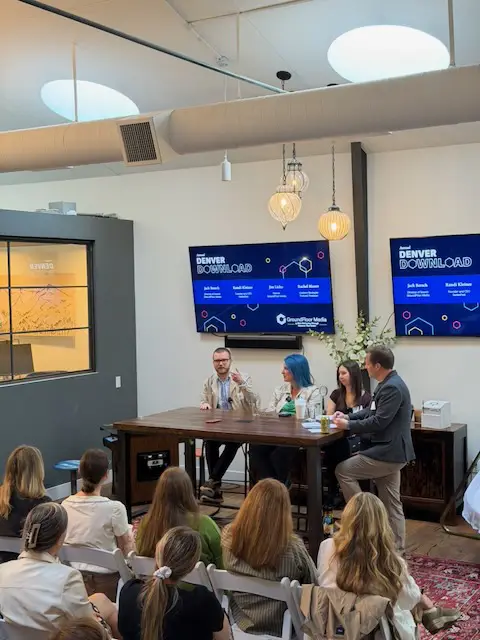
For more than 15 years, GroundFloor Media has made the annual trip to Austin to spot what’s next before it becomes standard operating procedure. This year, after returning from SXSW (and recovering from one too many tacos), GFM hosted its 12th annual Denver Download to unpack the biggest ideas shaping the future of communications.
The conversation featured GFM Partner Jim Licko, GFM search expert Jack Barsch, SeriesFest CEO Randi Kleiner, and content creator and marketer Rachel Moore. Together, they painted a picture of an industry in transition and one where AI is accelerating change; audiences are demanding more authenticity and brands have less room for error.
Here are the 10 biggest takeaways brand leaders should be paying attention to now.
1. AI Is No Longer Emerging. It’s Already Reshaping the Rules.
If there was one unavoidable theme at SXSW this year, it was AI. Nearly 100 sessions included AI in the title, and the technology surfaced in almost every other conversation.
But the tone wasn’t blind optimism. It was more nuanced: AI is powerful, unavoidable and disruptive, and brands that use it poorly will pay the price. As Rachel Moore put it, marketers are now living in a strange tension: audiences expect speed and relevance, but they are also increasingly skeptical of anything that feels manufactured or fake.
The takeaway: AI should accelerate better work, not replace human judgment. The brands that win will use AI to enhance creativity, not automate authenticity.
2. The Search Playbook Has Fundamentally Changed
One of the most talked-about SXSW sessions asked a blunt question: “Is search totally broken?”
The answer: not broken but transformed.
Today, 60% of Google searches end without a click because users are increasingly getting answers directly in AI summaries and search overviews.
That means the traditional formula of keyword stuffing, landing pages and basic SEO tactics is less effective. At the same time, search behavior is evolving fast. Traditional Google searches average just a few words. Queries in ChatGPT and other AI tools are often 10 times longer — more conversational and more context-rich.
The implication for brands is clear: content must now answer layered questions, anticipate follow-ups and deliver genuine value, not just rank.
3. Media Relations Matters More Than Ever in the AI Era
One of the most important (and often overlooked) implications of AI search is this: third-party credibility matters more than ever.
Roughly 80-85% of links surfaced in both AI-driven and traditional search increasingly come from neutral third-party sources, including earned media, industry coverage and trusted publications.
That’s a major opportunity for brands that have invested in reputation and authority.
For years, earned media has been seen by some as a nice-to-have. Today, it is a critical trust signal that influences discoverability across search and answer engines. For brands navigating complex issues, regulated industries or competitive markets, authority is no longer a soft metric. It is a business asset.
4. Your Website Is No Longer Your Billboard
For years, brands treated their websites like digital front doors. They were broad, brand-heavy and designed to introduce who they are.
That era is fading.
Today, by the time someone lands on your site, they often already know who you are. What they want is depth: a useful answer, a specific insight, proof of expertise or confidence in your offering.
That means websites need to evolve from static brochures into dynamic trust-building tools. The best-performing brands are creating deeper content ecosystems built around questions, concerns and real audience needs.
5. Brands Need to Join Culture, Not Interrupt It
SXSW made clear that the old model of interruptive marketing continues to lose power.
Today’s audiences are fluent in advertising. They can smell forced brand integration from a mile away. The brands getting it right are paying attention to what audiences are already doing and finding authentic ways to add value.
Two examples stood out:
- Vaseline noticed “Vaseline hacks” gaining traction on Reddit and TikTok, then created a “Vaseline Verified” approach to support useful tips already in the wild.
- Rhode famously air-dropped sunscreen to a creator sailing to Hawaii when he ran out mid-voyage, creating a moment that felt organic, useful and memorable.
The lesson: don’t force yourself into the story. Find ways to make the story better.
6. The Creator Economy Is Now the Mainstream Economy
For the first time, SXSW featured a dedicated Creator Economy track, a signal that the line between media company, creator and brand is dissolving fast.
Today’s creators are not just influencers. Many are writers, directors, producers and full-fledged businesses. That changes how brands should think about partnerships.
The smartest marketers are moving away from transactional influencer campaigns and toward creator relationships rooted in shared audience understanding, trust and long-term value.
7. Vertical Video Is No Longer Optional
If your brand is still treating vertical video as an afterthought, you are already behind.
From TikTok to Instagram Reels to YouTube Shorts, vertical-first content is now how audiences discover, sample and engage with brands. One of the biggest surprises from SXSW: Gen Z is increasingly watching short-form vertical video on TV screens.
That means format expectations are changing everywhere.
For brands, the takeaway is simple: content should be designed for how people actually consume media now, not how we wish they did.
8. Attention Isn’t Dead — Irrelevance Is
One of the most misleading narratives in marketing is that attention spans are disappearing. SXSW challenged that assumption.
Yes, short-form content matters. But people will still invest time when the content earns it. YouTube highlighted a Nissan campaign featuring a four-hour branded video that averaged five minutes of watch time, a remarkable engagement level for branded content.
The lesson: attention is contextual. Great marketers understand when audiences want speed and when they want substance. The goal is not just to be shorter. It is to be more worth watching.
9. Authenticity Is Becoming a Competitive Advantage
If there was one emotional undercurrent across SXSW, it was this: people are craving what feels real.
As AI-generated content floods feeds and platforms, authenticity is becoming more valuable, not less.
That doesn’t mean rejecting technology. It means understanding that trust, transparency and emotional resonance are becoming harder to fake.
Consumers increasingly want to know:
- Is this real?
- Is this useful?
- Does this brand actually understand me?
Brands that answer those questions consistently will have a durable advantage.
10. Human Connection May Be the Most Valuable Asset of All
Ironically, as digital tools become more powerful, in-person experiences and human relationships are becoming even more meaningful.
One of the clearest themes from SXSW, and from GFM’s Denver Download, was that people still want connection. They want shared experiences. Community. Conversation. Trust.
That matters for events, customer engagement, internal culture and brand building. Technology may change how we communicate, but it does not replace why people connect in the first place.
The Bottom Line
SXSW 2026 made one thing clear: the future of marketing is not about chasing every new tool or trend. It is about understanding how trust, attention and discoverability are changing and building smarter strategies around that reality.
At GroundFloor Media, we help brands navigate moments like this: when the landscape is shifting, the stakes are high and clarity matters most.
Because in a world where everything is changing fast, the brands that win won’t be the loudest. They’ll be the most credible, most relevant and most human.
If you’d like to talk with our team about AI’s impact on reaching your audiences, or how the world of marketing is evolving and what it means for your organization please reach out.